A recent study highlights the role of epigenetics in aging among dogs, showing that larger and male breeds experience accelerated molecular aging.
Understanding aging in dogs offers valuable insights due to their significant lifespan variations, which hinge on body size. Large dog breeds tend to have shorter lifespans compared to smaller breeds, raising the question of why that occurs. A study spearheaded by researchers at Arizona State University brings new clarity by exploring the intricate relationship between epigenetics and aging in nearly 900 dogs.
Epigenetic Clock and Its Implications
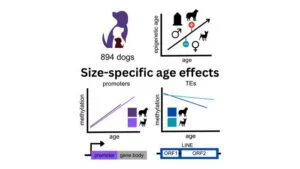
Led by Research Professor Noah Snyder-Mackler, PhD, the team developed an epigenetic clock capable of predicting dog mortality based on biological markers of aging. This epigenetic clock serves as a powerful tool, potentially revolutionizing how we understand not only canine aging but also aging mechanisms in broader contexts. Their findings highlight that molecular aging occurs more rapidly during the early stages of a dog's life, particularly underlining the differences between larger dogs and male dogs. Specifically, male dogs demonstrated significant DNA methylation alterations on the X chromosome, a vital region that influences a multitude of biological processes. Meanwhile, larger breeds exhibited changes in transposable elements (TEs), DNA segments known to impact genetic stability and gene expression. These insights into the molecular underpinnings of aging challenge traditional conceptions and open new avenues for research.
Implications of Research Findings
The study, published in Science, paints a compelling picture of epigenetics influencing lifespan. Snyder-Mackler, the paper’s senior author, concluded that “Our findings broadly establish companion dogs as a translational model for uncovering molecular mechanisms of lifespan variation, epigenomic instability, and age-related disease.” This suggests that by examining canine aging, researchers could unlock the causal mechanisms behind lifespan differences across species. As public interest in longevity grows, the notion that dogs can help illuminate the aging process in humans is more significant than it looks; after all, if we can understand why certain size and sex traits in dogs lead to more rapid aging, we might glean important insights into similar conditions in humans.
While aging is universal, its manifestations can vary greatly even among individuals of the same species. The team observed that whether shorter-lived dogs simply succumb earlier to age-related conditions or undergo an accelerated aging process throughout their lives remains an open question. This is an interesting conundrum. Traditionally, studies comparing species have highlighted traits linked to longevity, but they often fall short when it comes to identifying specific molecular drivers behind aging differences. Dogs serve as an ideal model due to their diverse sizes and their living conditions, which involve human interaction, regular healthcare, and standardized diets. This unique environment allows for a closer examination of how lifestyle factors intersect with biological aging.
The Longevity Puzzle: Size and Gender
Interestingly, smaller dog breeds can live nearly double the lifespan of their larger counterparts, extending the scope of investigation regarding the factors influencing longevity. This disparity in lifespan raises critical questions about size and age. The research further seeks to delineate how intrinsic traits like size and gender impact the aging process in dogs. While the link between size, sex, and lifespan is established, the implications of accelerated epigenetic aging in these groups needed more clarity. The tendency of larger breeds to age faster could indicate not just genetic predisposition but also environmental factors that affect them differently.
With the objective of identifying molecular signals linked to aging, Snyder-Mackler and first author Blaise Mariner, PhD, scrutinized epigenetic data from a collective cohort of 894 dogs in the Dog Aging Project, analyzing 1,640 methylomes. This comprehensive exploration revealed that larger and male dogs, both associated with reduced life expectancy, also undergo molecular aging at an accelerated pace. The numbers here are underwhelming; more than 800 dogs is a sizable sample but still relatively low for broad statistical generalization. Yet, the insights gleaned may not only help in comprehending canine aging but could also provide parallels for human health and longevity studies.
Distinct Epigenetic Patterns
The research highlighted distinct epigenetic patterns tied to these variations. Notably, sex-specific alterations were found predominantly on the X chromosome, whereas body size-related changes were more pronounced in TEs. This differentiation emphasizes the complexity of aging processes, suggesting they aren't merely a factor of aging per se but are influenced by multiple, sometimes intersecting pathways. The findings indicate that these two dimensions related to decreased lifespan in dogs sculpt aging via somewhat independent epigenetic pathways. Larger breeds exhibited a considerable loss of methylation in TEs as they aged, highlighting a connection to increased immune system changes and genetic instability. It’s a fascinating link, pointing to the multifaceted nature of aging biology.
Future Outlook: The Canine Aging Model
Ultimately, this research takes a significant step in comparative epigenomics by demonstrating that within a single species, demographic factors linked to shorter lifespans can equate to more rapid epigenetic aging. As scientific inquiry into the biological underpinnings of aging continues, the canine model may provide critical insights relevant to understanding aging across different species. If you’re working in this space, this could represent an invaluable opportunity. Studies like this may not only advance scientific understanding but also pave the way for engaging public health conversations regarding how we view aging, lifespan, and biological health across species lines. This is a busy area of research, and drawing connections between canine and human aging could yield fruitful discussions and studies in years to come.

Discussion
Sign in to join the discussion.