Industry experts share their thoughts on challenges and future directions for multiomics analysis, emphasizing the importance of data integration and sample preparation.
As the field of multiomics evolves, experts from various organizations are increasingly vocal about the challenges and critical considerations that lie ahead. Multiomics, which integrates multiple biological layers—genomics, transcriptomics, proteomics, and more—promises powerful insights but also faces notable obstacles as we approach 2026.
Sample Preparation: The Foundation of Successful Multiomics
Michael Easterling, PhD, vice president at Bruker Daltonics, emphasizes the pivotal role of sample preparation in ensuring successful outcomes in multiomics research. He points out that issues such as section-to-section variability and sample handling can significantly affect the integrity of the results. “I can’t stress enough how vital proper preparation is,” he states, highlighting how errors—such as improper freezing of biopsy samples—can create artifacts that compromise data reliability.
Scott Jelinsky, PhD, from Thermo Fisher Scientific, supports this viewpoint, mentioning that different molecular classes necessitate tailored approaches for sample collection and preparation. “Planning the workflow from the onset is essential,” he advises, noting that early decisions can influence the compatibility and interpretability of datasets across various assays.
Data Integration: A Complex Challenge
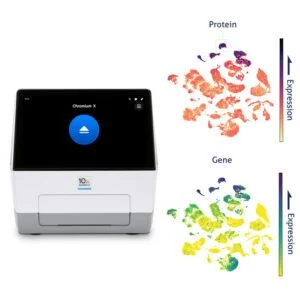
Integrating data from multiple omics layers presents considerable hurdles due to the distinctive nature of each data type. Najiba Mammadova, PhD, from 10x Genomics, highlights that the diversity among omics modalities complicates their statistical alignment. “Researchers need to ensure they are comparing the same biological features across different datasets,” she notes, underscoring the critical need for multi-modal measurements.
Techniques that allow for simultaneous measurement of multiple modalities are quickly gaining traction as they reduce the post-hoc reconstruction of biology. “This is essential for achieving an accurate snapshot of biological processes,” Mammadova adds. However, experts warn that aligning temporal dynamics of proteins, RNA, and metabolites poses another layer of complexity, as different substances can react at distinct rates.
The Role of AI in Multiomics Enhancement
Artificial intelligence is shifting perceptions in multiomics, signaling a transition from merely measuring data to interpreting complex datasets efficiently. Mammadova believes that AI technologies can aid in pattern recognition and data modeling, enhancing insights into disease progression and treatment responses. “We’re generating increasingly rich datasets, and that’s where AI can really shine,” she says.
Nevertheless, Easterling cautions that without proper sample preparation, even sophisticated AI models can produce misleading narratives. “If a model is based on poorly prepared samples, the results will inevitably lead to incorrect biological conclusions,” he warns.
Interestingly, recent advancements have illustrated how AI can improve precision in multiomics workflows. For instance, the Medical University of South Carolina has developed algorithms enabling lasers to target single cells with high accuracy. This capability could profoundly impact how researchers analyze and interpret data.
Extracellular Vesicles: Unique Multiomics Dynamics
The study of extracellular vesicles (EVs) introduces another layer of complexity. Pierre Arsène, CEO of Mursla Bio, describes EVs as critical communicators among cells, containing diverse biological content. Since each EV can originate from various cell types, traditional analysis methods often struggle to link specific signals to their tissue of origin.
Mursla’s innovative approach, which focuses on tissue-specific EVs (TS-EVs), aims to resolve these ambiguities. Using proprietary surface markers to isolate liver-specific vesicles from blood samples, this method enables precise biomarker discovery. “The advantage of TS-EVs is their inherent specificity, allowing us to analyze proteins and RNA without cross-contamination from other tissues,” Arsène explains.
The Road Ahead for Multiomics
Looking forward, experts acknowledge that scaling multiomics technologies will be necessary for broader adoption. Mammadova underlines the importance of making these advanced tools more cost-effective and accessible for large-scale studies, which could significantly expand their application in research.
Bruker’s Prajan Divakar emphasizes the growing demand for spatial multiomic analyses as researchers seek to capture the intricate details of disease biology. Technologies capable of measuring comprehensive datasets, such as Bruker’s CosMx, are at the forefront of this trend, as they can provide insights that inform clinical applications.
In conclusion, as the field navigates its complexities, a thoughtful approach that prioritizes quality over quantity will be vital. Combining distinct omics layers judiciously rather than merely adding additional analyses seems to resonate with several experts, including Jelinsky, who stresses the importance of selecting complementary measurements to derive meaningful insights.
As multiomics continues to mature, the trajectory of the field suggests a focus on collaboration, standardization, and innovative methodologies that promise to unlock deeper biological understanding.


Discussion
Sign in to join the discussion.