At ASHG’s Montreal meeting, Susan Slaugenhaupt argued that scientists must support their teams, communicate beyond the lab and keep discovery focused on patients.
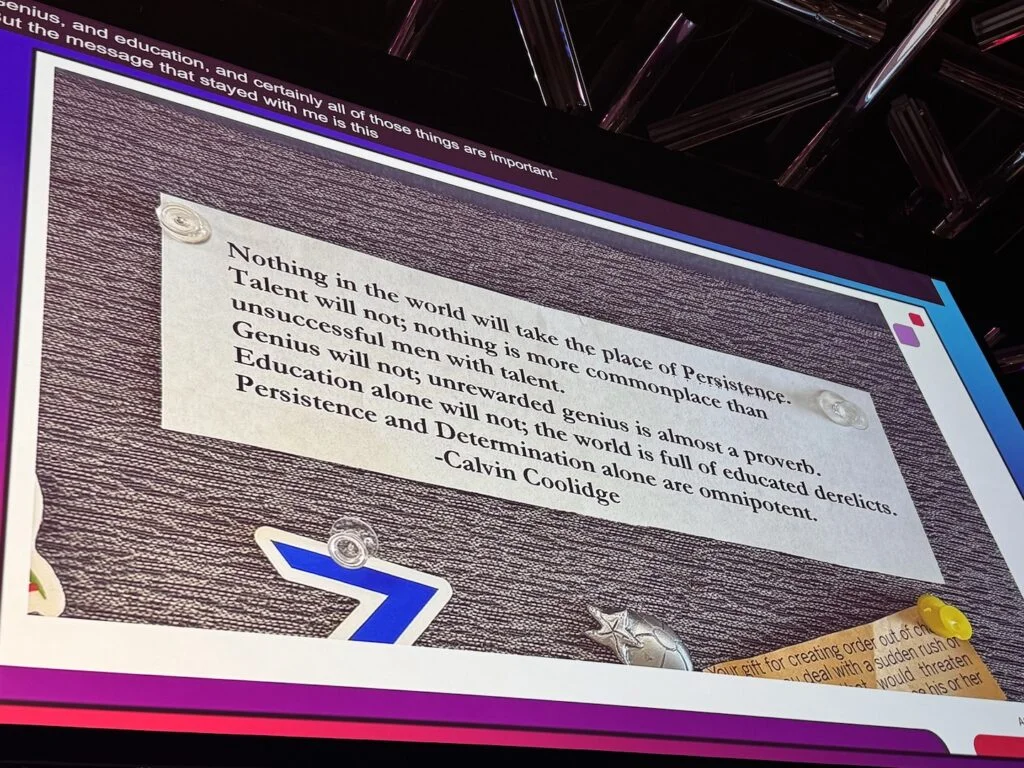
For Susan Slaugenhaupt, the case for persistence in science is practical: research depends on people who keep working through setbacks, support one another and explain why their work matters. In her presidential address at the American Society of Human Genetics (ASHG) meeting in Montreal, the Harvard Medical School neurology professor placed those responsibilities alongside a candid account of the pressure on U.S. science.
Her message was not simply to endure a difficult moment. Slaugenhaupt argued that scientists have a role in shaping what comes next: sustaining the teams that do the work, protecting the enthusiasm that draws people into research, and communicating with a public whose trust cannot be secured by data alone.
Persistence as a shared practice
Slaugenhaupt began by acknowledging how hard it was to know what to say in a presidential address. Friends had encouraged her to offer hope and speak from the heart. She responded by describing persistence as more than a way to get through difficult stretches. “Persistence is not simply how we survive difficult periods in science. It is how we protect our passion, strengthen our teams, and turn discovery into a better future,” she said.
That framing matters because the obstacles she described are not confined to individual laboratories. Slaugenhaupt said she shared the anger and frustration many scientists feel about how science in the United States is reviewed, funded and perceived. She pointed to pressure on education, the influence of political forces on scientific priorities, vaccine rejection and distrust of physicians. In her account, these challenges affect both the conditions for research and the public’s relationship with evidence.
Scientists often answer skepticism by presenting more data. Slaugenhaupt’s point was that evidence remains essential, but it does not automatically bridge divisions. She called on researchers to act, persist and communicate, while arguing that political beliefs should not determine the value of scientific discovery. Her address treated communication as part of scientific responsibility, not an optional activity to take up after the research is done.
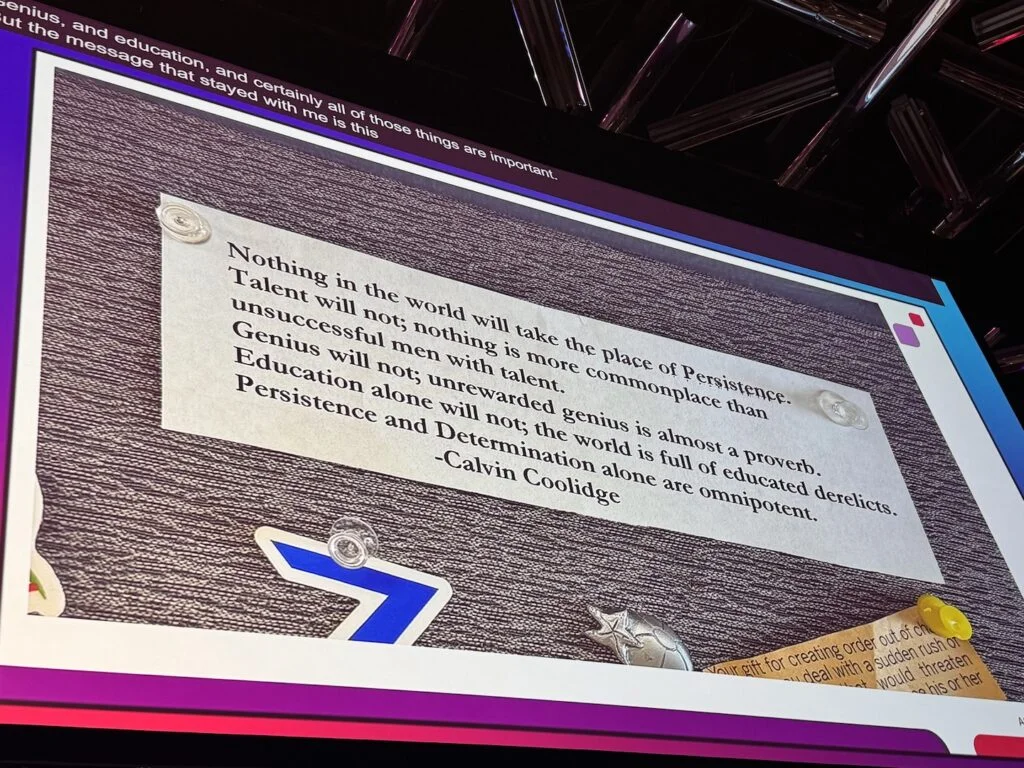
Persistence, in this view, is not solitary grit. It depends on relationships and institutions that help people continue their work. Slaugenhaupt recalled that, after a particularly difficult day in the lab, a team member taped a quote to her office door. The note has remained above her desk for nearly 30 years. She said its lesson—that determination can carry people forward when other resources have been exhausted—helped shape her later approach to leadership.
Leadership starts with the team
Slaugenhaupt connected her personal lesson in persistence to a broader point about building cohesive teams. Her advice applies across the research enterprise, whether a person leads a laboratory or serves on an organizational leadership team: pay attention to colleagues, treat them well and recognize how much their work contributes to individual success.
She urged leaders to give credit generously, ask people what they need to succeed, notice quieter colleagues, and make it safe to acknowledge mistakes. She also emphasized creating room for people to grow into their roles. Those are concrete management practices, but they carry a wider significance in a field where complex research depends on many people contributing over time.
Her sharpest leadership observation was that career success changes meaning. At a certain point, she said, it becomes less about advancing yourself and more about helping others advance. That shift asks established scientists to think beyond their own work and make conditions better for colleagues and the next generation of researchers.
Young scientists and patient families keep the future in view
Slaugenhaupt described passion as a defining quality of scientists: people pursue the work because curiosity has grown into purpose, and science has become part of who they are. She said she continues to see that commitment across the field, particularly among young people.
For 15 years, she has run an undergraduate summer student program. Each summer, she sees students arrive with optimism, energy and the conviction that their work could change lives. Some, she said, probably will make discoveries with that effect. The students give her a reason to remain hopeful because they represent both the future of research and the sense of possibility that sustains it.
Patients and families offer another source of perspective. Slaugenhaupt noted that hundreds of millions of people worldwide live with genetic disease. Many endure long searches for a diagnosis, only to learn that no treatment is available. Researchers who work with families see the determination of parents seeking help for their children, she said. Their persistence gives scientific work a human context: discoveries matter because people are waiting for answers.
Communication is part of the work
Slaugenhaupt put public engagement at the center of the presidential symposium, which was designed to examine barriers to meaningful communication and consider what scientists can do to bridge them. Her message was direct: speaking out is no longer optional, and while protest may not suit everyone, communication is a responsibility shared across the field.
She called on researchers to explain the contribution of science, human genetics and genetics to health around the world. That requires more than reciting findings. If data alone are not closing the distance between scientific institutions and the public, scientists have to consider how they describe their work and make its relevance clear to people outside their immediate professional circles.
The need for that effort is tied to the conditions Slaugenhaupt described. She said the previous 18 months had brought an unprecedented challenge to U.S. science, with actions affecting scientific integrity, public trust and research funding. She cautioned against assuming that the field is simply waiting to return to how things were. Scientists, she argued, are being asked to help shape what comes next.
Her closing advice brought the address back to the daily work of research: build teams that support one another, recognize each other’s successes, explain the purpose of science to people beyond the room, and protect the passion that brought researchers into the field. She urged scientists to persist for students beginning their careers, for patients and families waiting for answers, and for one another.
Slaugenhaupt ended with confidence that human genetics and genomics will continue to transform medicine and improve lives around the world. The practical implication of her address is that this future depends on more than discovery alone. It also depends on teams able to sustain the work and scientists willing to make its value understood.
The post ASHG President Susan Slaugenhaupt Calls for Hope, Leadership, and Communication in Science appeared first on GEN - Genetic Engineering and Biotechnology News.

Discussion
Sign in to join the discussion.