A genetic study on Jonathan, the world's oldest land animal, reveals how his specific gene variants contribute to his extraordinary lifespan.
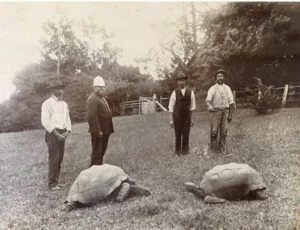
Jonathan, the Aldabra giant tortoise, holds the title of the oldest known living land animal at an impressive 194 years. Researchers suggest that a combination of advantageous gene variants and minimal genetic deterioration has played a significant role in his longevity.
The study, led by Stephen Clark, MD, PhD, from the Kallel Foundation, involved sequencing Jonathan’s genome and uncovering 287 unique gene variants associated with reduced aging effects. By examining Jonathan’s epigenome—the regulatory “on/off” switches for genes—compared to younger tortoises of the same species, the team found that the switches regulating his DNA repair and metabolic processes remained remarkably intact. This stability is unusual, as the epigenome typically changes with age, leading to common health issues in older individuals.
Justin Gerlach, PhD, from Peterhouse at the University of Cambridge and a collaborator on this study, remarked, “The gene regulators responsible for energy production and DNA repair have shown incredible consistency in Jonathan for nearly two centuries.” This consistency suggests that a unique biological mechanism may be at play in aiding his extended life.
This remarkable research marks a landmark moment in our understanding of aging in giant tortoises, showcasing the first analysis of an ancient tortoise's epigenome. The findings were published in the journal Science Advances, in a paper titled “Epigenetic insights into extreme longevity in the world’s oldest terrestrial animal, Jonathan.” The authors proposed a theory that associates the maintenance of low methylation entropy in gene promoters with effective mitochondrial energy production, RNA processing, and genomic repair, integral for longevity.
Giant tortoises, such as those found in the Galapagos and Seychelles islands, represent a lineage that historically flourished across numerous islands. However, Jonathan stands out as he is approximately 100 years older than most of his kin. Born around 1832, he shares a historical timeline with notable figures like Charles Darwin and Queen Victoria.
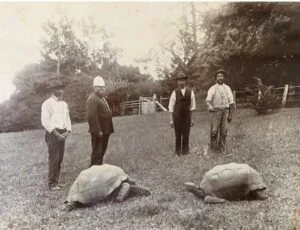
Jonathan has spent most of his life residing at a governor’s residence on St. Helena, a British Overseas Territory in the South Atlantic. He was brought to the island from the Seychelles in 1882, arriving fully matured as a gift to the governor.
Gerlach, who has extensive experience in studying the conservation and ecology of giant tortoises, noted, “There are few creatures that offer insights into aging like giant tortoises. Collaborating with such an ancient being feels more like a partnership than a typical study.”
The research team employed cheek scrapings to extract DNA from Jonathan rather than traditional blood draws, which were not permitted due to health concerns. They were able to extract genomic material by enticing the tortoise with food, showcasing both a creative and ethical approach to genetic research. “We analyzed buccal scrapes and saliva samples to obtain genomic DNA (gDNA) for our studies,” the authors stated.
The team’s analysis identified genetic variants linked to various aging pathways, emphasizing processes like DNA repair, telomere maintenance, and mitochondrial function. They assessed Jonathan’s methylome, which reflects genetic methylation patterns that influence gene expression. The results demonstrated notably low methylation entropy in gene promoters tied to mitochondrial function and RNA processing. This low entropy suggests that Jonathan’s genes maintain high fidelity at transcription, which may be vital for species with extended lifespans.
Clark emphasized the implications of this research: “Nature has found significant solutions to the challenge of aging, and Jonathan's genome offers insights into cellular resilience. Our aim is to leverage these evolutionary insights to develop effective, accessible longevity treatments for people.” Aging remains a leading risk factor for numerous chronic diseases, and with philanthropic support, the team hopes to democratize advancements in longevity science.
In their research paper, the authors summarize their most significant findings: while many genetic variants relating to aging were identified in Jonathan, the key observation was the preserved low entropy within specific gene promoters. This consistency is particularly evident in genes related to mitochondrial function and RNA processing, indicating a potential mechanism for protecting against aging-related decline.


Discussion
Sign in to join the discussion.