Researchers are merging mechanistic modeling with AI to develop hybrid digital twins for future autonomous labs, enhancing bioprocess performance.
Advancements in Digital Twin Technology
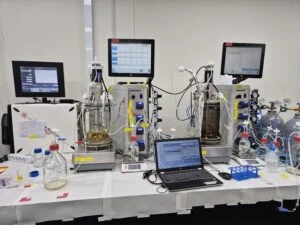
Researchers at Sungkyunkwan University in South Korea are embarking on an ambitious project to build an advanced digital twin that merges mechanistic modeling with the power of artificial intelligence (AI). This initiative isn't just about creating simulations; it aims to develop a lab environment capable of functioning autonomously. Such advancements promise to minimize human involvement while allowing operations to scale significantly, reflecting a shift in how bioprocessing could be approached in the future.
The intersection of simulation technology and real-time data processing is a hot topic in various industries. From manufacturing to healthcare, the ability to model complex systems accurately can lead to reduced costs and improved efficiency. If you're working in this space, the implications of such developments are worth scrutinizing closely.
Hybrid Modeling Approach
At the forefront of this research is Dong-Yup Lee, PhD, who heads the Bioprocess Digital Twin Lab. His team adopts a hybrid model that integrates both mechanistic and AI-driven data analysis techniques. This combination aims to provide a more nuanced understanding of biological processes by enabling continuous monitoring through a multi-sensory system. This system collects critical data from bioreactors, which are essential for pharmaceutical development and production.
One area of focus for the team is mathematical modeling of mammalian Chinese Hamster Ovary (CHO) cells. These cells are crucial in drug production, particularly for therapeutic proteins and vaccines. Modeling their behavior under various conditions can yield predictive insights that enhance decision-making in bioprocessing. However, as Lee points out, a sole reliance on mechanistic models isn't always sufficient for the precision required in real-time applications.
The Role of AI in Enhancing Model Performance
Here's the thing: while mechanistic models provide foundational insights, incorporating AI allows for a heightened level of adaptability in bioreactor control. Data-driven predictions are essential, but they also need to be actionable. AI excels at crunching vast amounts of data, yet it often struggles with interpretability. Lee articulates this concern, noting that AI can offer predictions, yet the reasoning behind those predictions can be murky. That's a significant issue when you're trying to optimize processes that require both precision and reliability.
The solution they've implemented is the use of explainable AI (XAI), which makes the outcomes more interpretable. It helps researchers understand not just what is likely to happen, but why. By clarifying the relationships between input conditions and process outputs, this interpretative layer becomes a tool for enhancing bioprocess performance. This approach aligns with larger trends in AI, where transparency is becoming increasingly essential. (And this is the part most people overlook: the need for models that explain their reasoning.)
Challenges in Model Integration
Despite the promising developments, the team faces significant challenges in marrying mechanistic models with XAI. Ensuring seamless interaction between data collection, predictive capabilities, and control processes isn't trivial. Challenges like these are common when trying to integrate complex systems, particularly in highly regulated environments like biopharmaceuticals. The friction points can often stall progress, making it crucial for research teams to be adaptive as they navigate these obstacles.
Lee mentions that their hybrid model is approximately 80% complete, leaving about 20% of the project devoted to integrating these models with their control systems. This phase will involve painstaking adjustments and refinements to ensure that the system can handle real-world complexities without succumbing to the common pitfalls of overfitting in data models or experiencing latency in decision-making processes.
Forward-Thinking: Autonomy in Bioprocessing
Lee emphasizes that marrying these elements will be critical as his team engages in ongoing research. Their focus is gradually shifting toward achieving increasingly autonomous operations, stepping beyond mere predictive capabilities. This perspective highlights a broader trend within the field: the pursuit of autonomy in biomanufacturing. The ability to automate processes might streamline operations, potentially reducing costs while increasing production yields. However, it’s also essential to weigh the risks involved. Automation can bring about new challenges, including potential errors in model predictions leading to significant operational setbacks.
Implications for Industry Partnerships and Future Research
The implications of this research extend beyond the lab. Lee appears open to industry partnerships, particularly in domains that intersect with digital twins, advanced bioprocess monitoring, and autonomous biomanufacturing. Collaborations could provide additional resources, expertise, and avenues for practical applications of their work. Partnerships will be essential for translating this research into actionable solutions that can be leveraged in industry settings.
The path ahead seems promising but fraught with complexity. As the research continues to evolve, expect to see debates over the efficacy and safety of automated systems in sensitive environments. Will these technologies upend traditional ways of operating, or will they complement and enhance human oversight? What this means for you is that keeping an eye on advancements like these will be critical; their consequences could ripple through the industry for years to come.
Discussion
Sign in to join the discussion.