Erica Schwartz's CDC nomination reveals tensions over vaccine policies as she pledges to restore public trust amidst concerns of political influence.
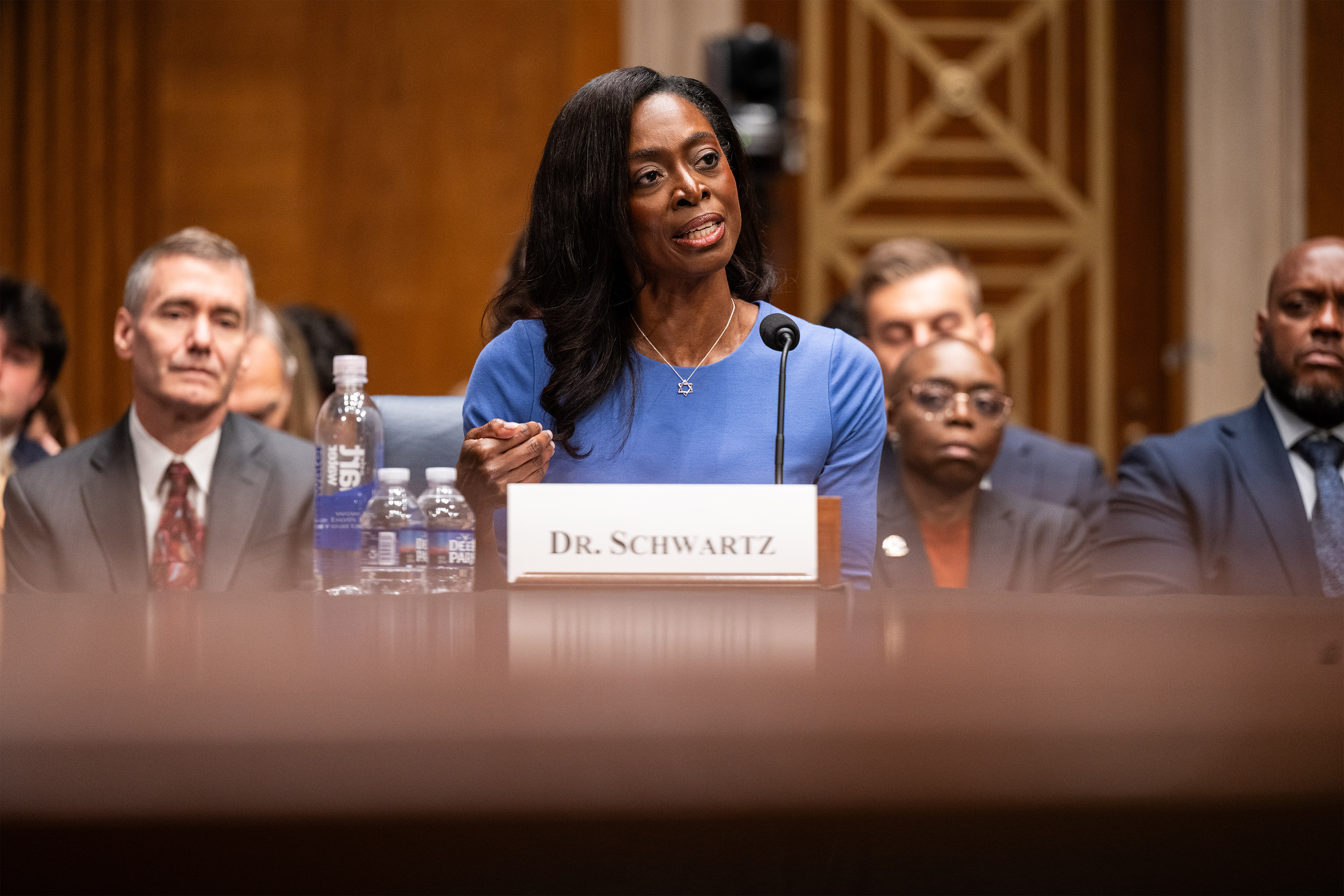
President Donald Trump's nominee to lead the Centers for Disease Control and Prevention (CDC), Erica Schwartz, affirmed her support for vaccines, including mRNA COVID-19 shots, during a recent Senate hearing. Despite her clear endorsement of vaccines, doubts remain about the agency's autonomy under Health and Human Services Secretary Robert F. Kennedy Jr., known for his anti-vaccine stance.
In her testimony, Schwartz, who has a lengthy background in the uniformed services, stated, "I have been vaccinating people throughout my entire career. I believe in vaccines." Furthermore, she articulated her confidence in the safety and effectiveness of mRNA technology. These points mark a sharp contrast to Kennedy's criticisms of vaccines, which he claims to be dangerously ineffective.
Amid increasing skepticism regarding the CDC's political independence, Schwartz's nomination comes at a time when the agency has faced significant challenges. There are concerns over recent public health funding cuts, dismissals of key staff, and efforts to modify childhood vaccination programs. Schwartz's prior role as deputy surgeon general in Trump's first term and her experience as the Coast Guard's chief medical officer have led many in the public health community to advocate for her as a stabilizing force.
During the hearing, Schwartz emphasized her commitment to following scientific guidelines unimpeded by political pressures. "I will follow the science wherever it leads," she assured lawmakers. Democratic concerns about her capacity to maintain independence from Kennedy echoed throughout the session. Notably, many fear she may not deviate from the direction set by Monarez, the previous CDC director who was dismissed after refusing to conform to Kennedy's directives regarding vaccination policies.
Senator Bill Cassidy (R-La.), chair of the Health, Education, Labor, and Pensions (HELP) Committee, directly questioned Schwartz about her ability to navigate potential policy disputes. “We need unbiased leaders who make decisions based upon science," Cassidy remarked, stressing the urgency of the matter.
As the backdrop to Schwartz's nomination, previous administration actions under Trump included significant cutbacks to CDC and NIH grant research, particularly targeting projects focused on diversity and inclusion. When asked about these shifts, Schwartz reiterated, "Restoring trust to the CDC is my No. 1 priority. Scientific integrity is core." This assertion aligns with comments from the American Public Health Association, whose CEO endorsed Schwartz, citing her evidence-based approach to maintaining the organization's integrity.
Despite Schwartz's firm stance on scientific integrity, certain senators remain apprehensive regarding the overarching influence of the current administration. Senator Tammy Baldwin (D-Wis.) expressed skepticism about political influences affecting CDC research, pointing to a troubling “political scrubbing” seen with recent grant cancellations.
While Schwartz did express her willingness to support some of Kennedy's health initiatives, such as promoting nutrition education, her ability to strike a balance between the demands of her position and scientific independence is yet to be seen. Schwartz's comments, “if I am confirmed, I am committed to radical transparency and modernization,” suggest a willingness to reform the CDC's image.
At the hearing, Schwartz addressed scrutiny alongside Sean Kaufman, Trump's candidate for assistant secretary for preparedness and response. Kaufman found himself in the spotlight as Senator Cassidy confronted him for previously expressing doubts about vaccine safety. Kaufman reaffirmed, “Vaccines save lives. They are safe and effective,” highlighting continued advocacy for vaccination despite political divides.
If confirmed, Schwartz will replace interim CDC Director Jay Bhattacharya, a contentious figure in public health circles already poised at the intersection of scientific authority and political allegiance. The examination of her qualifications and commitment to public health integrity stands at a pivotal moment, as the CDC endeavors to rebuild trust with the American public in the face of political challenges.
KFF Health News is a national newsroom dedicated to in-depth journalism on health issues and part of KFF—an independent source for health policy research and journalism. Explore more about KFF.
This article originally appeared on KFF Health News and is republished under a Creative Commons Attribution-NonCommercial-NoDerivatives 4.0 International License.

Discussion
Sign in to join the discussion.