Verastem's KRAS inhibitor demonstrates promising results in pancreatic cancer treatment, potentially altering therapeutic strategies.
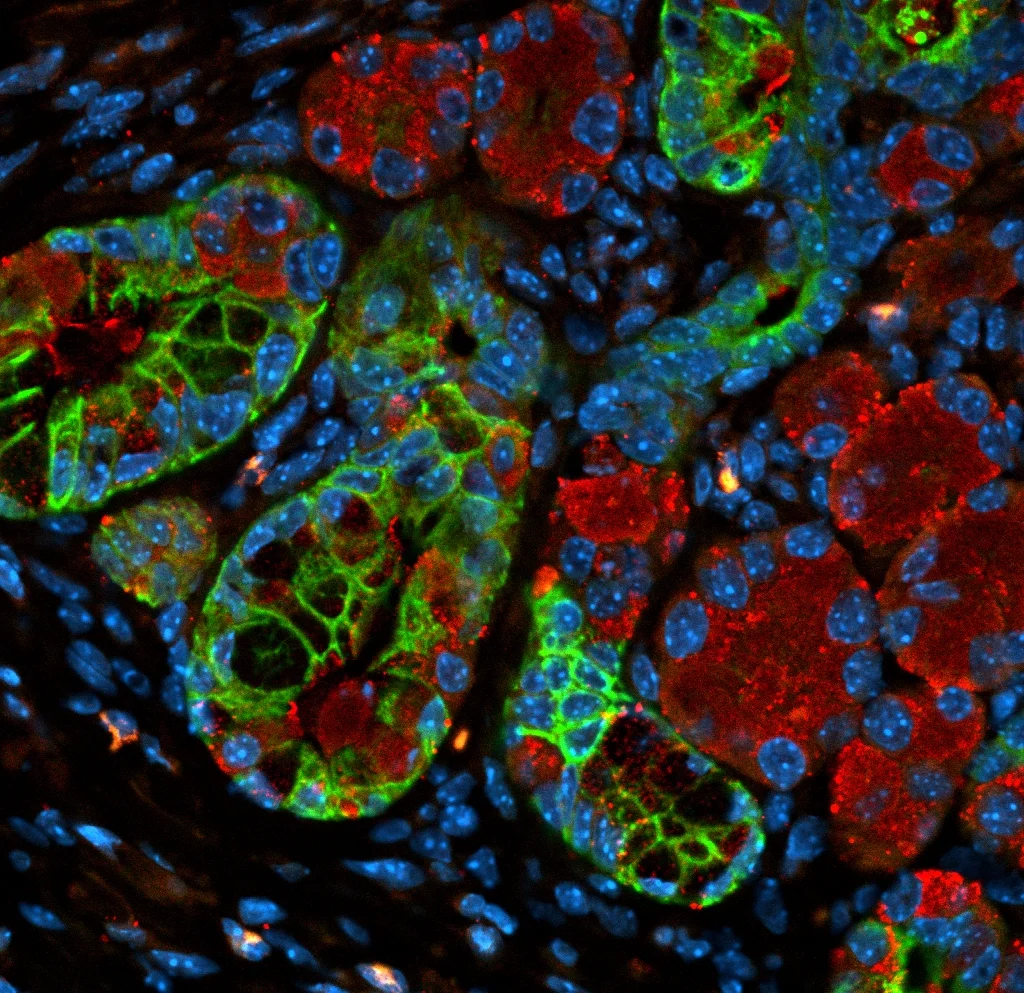
Verastem has made strides with its KRAS inhibitor, showcasing significant potential in the treatment of pancreatic cancer. This connection is particularly notable given the compound's ability to target a common mutation found in more aggressive cancer forms.
Understanding KRAS Inhibition in Cancer Treatment
KRAS is a gene that plays a pivotal role in cellular signaling pathways that control cell growth and division. Mutations in the KRAS gene are notably prevalent in various cancer types, including pancreatic, colorectal, and lung cancers. In pancreatic cancer, the KRAS mutation is implicated in about 90% of cases, making it a prime target for therapeutic intervention. These mutations lead to incessant signaling for cell proliferation and survival, contributing to the aggressive nature of such tumors. Verastem's focus on a KRAS inhibitor is key, as traditional treatments often fall short due to the cancer's resilience and the complexity of its biology.
The current landscape for targeting KRAS mutations has been tepidly explored, with a few therapies having reached market approval. Notably, the introduction of drugs like Amgen's Lumakras has initiated a wave of interest in this category. However, the broader implications of KRAS inhibition are far-reaching. If Verastem's compound proves effective, it could signify a breakthrough in managing pancreatic cancer, which is notoriously difficult to treat and often diagnosed at an advanced stage. The urgency here is considerable: pancreatic cancer has one of the lowest survival rates compared to common cancers.
Funding Highlights
In related news, U.K.-based OMass Therapeutics has successfully secured $310 million to advance its portfolio, specifically focusing on drugs for congenital adrenal hyperplasia. This recent funding round stands out not just for the sum but also for OMass's focused strategy. Congenital adrenal hyperplasia, a disorder affecting hormone production, is often underrepresented in biotech funding discussions. OMass's success reflects a broader trend where niche conditions are finally attracting necessary capital, potentially leading to innovative therapies for underserved patient populations.
Meanwhile, investment firm Orbimed has raised close to $3 billion across two new private equity funds aimed at healthcare investments in the U.S., Europe, and Asia. Orbimed’s significant fundraising is indicative of a growing appetite for healthcare investments, particularly in biotech, which remains robust despite recent market fluctuations. This inflow of cash is pivotal, as cutting-edge biotech ventures often require substantial upfront capital to navigate the lengthy and expensive drug development process.
Market Dynamics
There's an emerging narrative in the biotech sector suggesting that China's growing biotech industry poses a challenge to U.S. venture capital firms. The globalization of biotech is witnessing a seismic shift, with Chinese firms increasingly attracting investment and attention. Reports have surfaced suggesting that the quality of research and the speed at which Chinese companies bring products to market is improving, forcing traditional powerhouses in the U.S. to reassess their strategies. Companies in China have already begun to capture market share traditionally held by American firms. That’s concerning for U.S. stakeholders.
Industry observers are noting that the impact isn't limited to U.S. companies alone; the competitive landscape is evolving as investments flow into Chinese biotechnology. What this means for you is a potential increase in collaboration and competition on a global scale. Chinese firms are not just imitating but are increasingly innovating, leading to a more competitive global environment in biotech. If you're working in this space, keeping an eye on these overseas developments could be key for strategic planning.
Implications and Future Outlook
The implications of Verastem's advancements in KRAS inhibition and the burgeoning global biotech competition cannot be overstated. If Verastem's drug is successfully integrated into treatment protocols for pancreatic cancer, it could lead to a shift in how aggressive cancers are approached. This would not only benefit patients but may also prompt larger pharmaceutical companies to prioritize similar research angles.
At the same time, the influx of funding into companies like OMass represents a critical pivot towards addressing less common but impactful diseases. As the investment climate continues to evolve, we might see a realignment of priorities in biotech, shifting focus from high-profile diseases to those that have been overlooked for far too long.
Meanwhile, U.S. firms face a crossroads. As Chinese biotech capabilities grow stronger, an unnerving dynamic of competition emerges. Traditional U.S. dominance is at risk, necessitating an adaptive approach. Collaboration between U.S. and Chinese firms may burgeon, leading to shared innovations that ultimately benefit global health.
In summary, the situation mandates close observation. Verastem's KRAS inhibitor is more significant than it looks on the surface, and how these competing forces unfold will shape the future of biomedical research and treatment. The coming years may redefine norms and expectations in both treatment outcomes and global market strategies.


Discussion
Sign in to join the discussion.